Best Estate Hotels for Weddings: A Definitive Guide to Luxury Venues
The selection of a venue is rarely just a matter of aesthetics; it is an architectural decision that dictates the logistical flow, emotional resonance, and operational feasibility of a multi-day event. In the upper echelons of the hospitality market, the estate hotel has emerged as the definitive solution for those seeking more than a ballroom. These properties offer a “contained ecosystem”—a vast, private geography where the ceremony, reception, and guest residency occur within a singular, cohesive narrative. This shift toward “estatification” reflects a growing desire for exclusivity and a rejection of the high-turnover, “conveyor-belt” wedding models found in traditional urban hotels.
Managing a wedding within an estate context, however, introduces a level of complexity that surface-level planning guides often overlook. One is not simply booking a room; one is temporarily assuming stewardship of a working landscape. This involves navigating the delicate balance between a property’s historic preservation requirements and the modern infrastructure demands of high-tier catering, entertainment, and guest comfort. To analyze the landscape of high-acreage venues is to understand the friction between “grandeur” and “utility”—the ease with which a 17th-century garden can accommodate a 21st-century production crew.
This analysis serves as a rigorous investigation into the structural and systemic variables that define a world-class venue. We will move beyond the superficial metrics of “scenery” to examine the underlying mechanics of estate management: the ratio of guest-to-land, the permeability of private quarters, and the resilience of remote infrastructure. By deconstructing the components of these elite properties, we can establish a framework for identifying the locations that offer not just a backdrop, but a robust operational foundation for complex, multi-layered celebrations.
Understanding “Best Estate Hotels for Weddings”
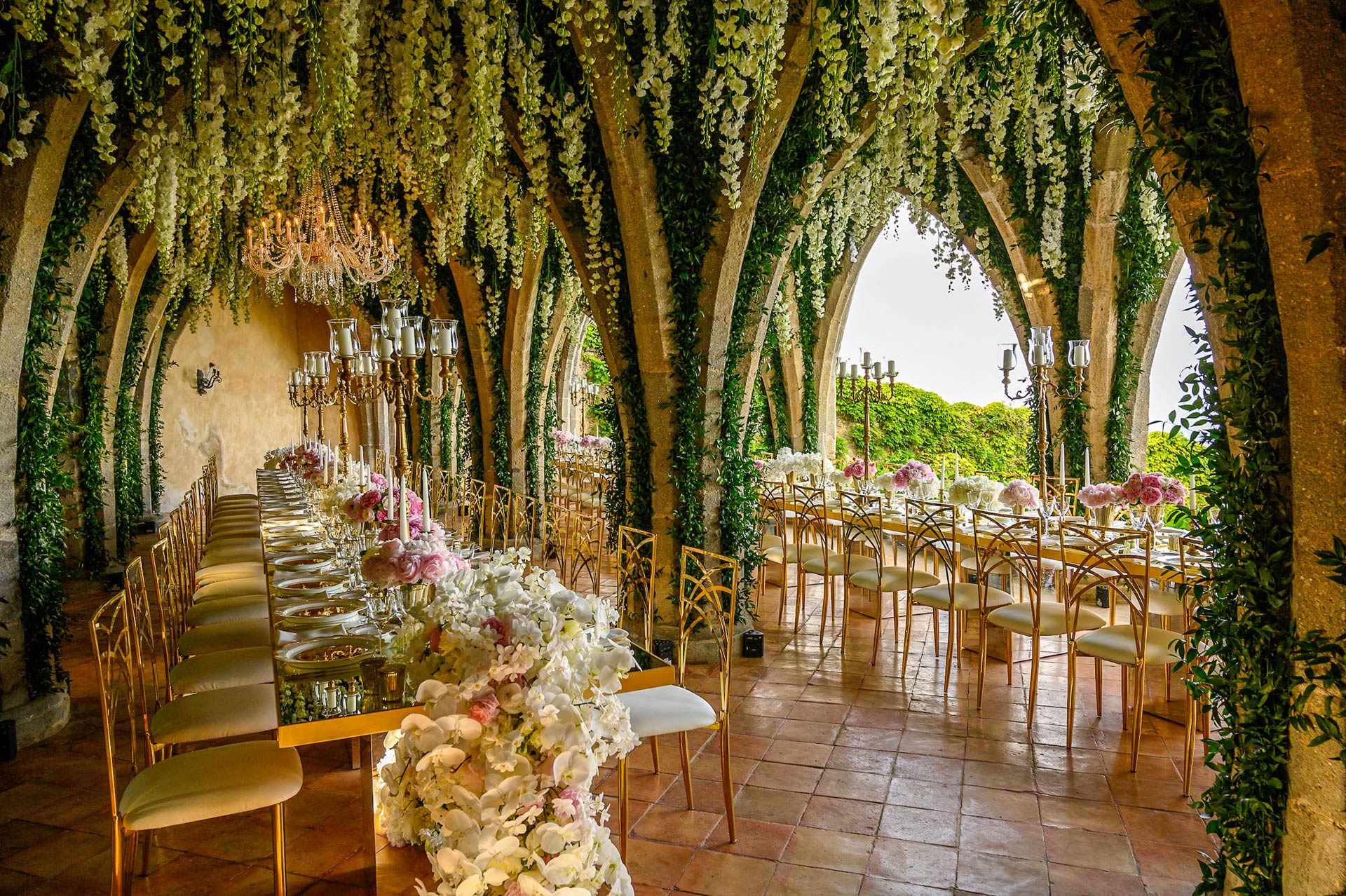
The phrase “best estate hotels for weddings” is often diluted by marketing hyperbole, yet it represents a specific intersection of hospitality and land management. To the serious researcher or planner, “best” is not an aesthetic judgment; it is a measure of “Operational Harmony.” A property may be visually stunning, but if the kitchen is located half a mile from the dining marquee, or if the electrical grid cannot support a professional lighting array without a generator, its status as a premier venue is compromised. True excellence in this category is found when the property’s physical constraints are invisible to the guest but perfectly accounted for by the staff.
A frequent misunderstanding in this sector is the conflation of a “country hotel” with an “estate hotel.” A country hotel is a building in a rural setting; an estate hotel is a building that is inseparable from its vast, managed acreage. In the context of a wedding, this distinction is vital. An estate allows for “Zone Segmentation”—the ability to host a welcome dinner in an orchard, a ceremony in a walled garden, and a farewell brunch in a restored stable block—all without guests crossing their own paths or seeing the “back-of-house” logistics.
Furthermore, oversimplification often occurs when planners focus solely on the “bridal suite” or the “grand hall.” A rigorous evaluation of the best estate hotels for weddings must prioritize “Infrastructure Permeability.” This refers to how easily the property allows for the “loading and striking” of third-party vendors. If a venue has a singular, narrow gravel driveway that cannot accommodate a catering truck and guest arrivals simultaneously, it creates a logistical bottleneck that can derail the entire event schedule.
Deep Contextual Background: From Private Seat to Public Celebration
The estate was the theater of the dynasty. Following the economic shifts of the early 20th century, many of these “power houses” faced a choice: decay or commercialization. The birth of the modern estate hotel was a survival mechanism that eventually evolved into a high-art form of hospitality.
In the mid-20th century, the “country house hotel” model began to professionalize. What was once an informal stay in a drafty manor became a structured service experience. However, it wasn’t until the late 1990s that the “Destination Wedding” phenomenon forced estates to rethink their infrastructure. Properties realized that to compete on a global stage, they needed to provide more than just a room; they needed to provide a “Curated Wilderness.”
Modern estate weddings often incorporate the property’s own produce, utilize its natural topography for “sound-scaping,” and leverage its isolation for extended noise ordinances that urban hotels cannot match. This evolution has created a specialized economy of vendors and planners who speak the specific language of “Estate Logistics,” prioritizing things like “power-draw management” and “terrain-appropriate footwear” over traditional ballroom metrics.
Conceptual Frameworks and Mental Models
To evaluate these properties without falling into the trap of subjective preference, we can utilize several mental models:
The “Radius of Seclusion” Framework
This model measures the distance between the guest’s experience and the outside world. An elite estate wedding should feel like a “temporal bubble.” If the sound of a highway or the sight of a neighbor’s silo breaks the immersion, the “radius” is insufficient. The best properties use their acreage to create a psychological sense of total isolation.
The “Staff-to-Terrain” Ratio
In a traditional hotel, staffing is calculated per guest. In an estate, it must be calculated per guest plus per acre. A property might have a high room-service count, but if there aren’t enough groundskeepers to clear a sudden fallen branch on the ceremony path, the system fails. This framework assesses whether the property is “land-rich but labor-poor.”
The “Heritage-Utility Paradox”
This model addresses the tension between preserving a 300-year-old staircase and the need to move 200 guests through a space in under ten minutes.
Key Categories of Estate Venues and Trade-offs
Properties generally fall into several distinct archetypes, each with inherent advantages and systemic challenges:
-
The Agrarian Luxury Estate: Often working farms or vineyards. Trade-off: Highly seasonal; “harvest noise” or smells can be unpredictable.
-
The Coastal Manor: Vast estates with private beach access. Trade-off: High maintenance due to salt-air corrosion; unpredictable weather patterns.
-
The Forest Sanctuary: Remote properties surrounded by thousands of acres of woodland. Trade-off: Complex logistics for guest transport; high fire-risk considerations.
-
The Historical Fortress/Castle: High-walled, defensible spaces. Trade-off: Often “vertically challenged” with many stairs and narrow corridors.
-
The Master-Planned Contemporary Estate: Purpose-built for modern luxury on large acreage. Trade-off: May lack the “soul” or historical depth of older properties.
Comparative Table: Venue Archetypes
| Archetype | Primary Value | Key Constraint | Guest Experience Flow |
| Agrarian | Provenance/F&B | Seasonality | Relaxed/Rustic |
| Coastal | Vistas/Air | Weather Risk | High-Energy/Open |
| Forest | Silence/Deep Privacy | Access/Transport | Intimate/Enclosed |
| Historical | Authority/Drama | Accessibility | Formal/Staccato |
| Planned | Utility/Modernity | Newness/Aesthetic | Seamless/Linear |
Real-World Scenarios and Decision Logic
Scenario: The High-Production Destination Wedding
A couple plans a three-day event with a professional orchestra, a 20-person film crew, and elaborate floral installations. The decision logic dictates a Planned Contemporary Estate or a heavily retrofitted Historical Fortress. The priority is “Technical Load-In.” A traditional agrarian estate would likely fail under the power demands of the film crew.
Scenario: The Intimate “Slow-Food” Retreat
A party of 40 seeks a weekend of culinary immersion. The Agrarian Luxury Estate is the logical choice. The decision point here is “Productive Capacity”—can the estate actually feed the guests from its own land, or is it just a “farm-themed” resort? The failure mode is a lack of specialized service staff for such a niche experience.
Scenario: The High-Security Celebrity Nuptials
The priority is “Total Perimeter Control.” The Forest Sanctuary with a single access road provides the best natural defense. The second-order effect is the “Exfiltration Plan”—how quickly can the party be moved if a security breach occurs?
Planning, Cost, and Resource Dynamics
The financial structure of an estate wedding is fundamentally different from a standard venue. In a ballroom, you pay for the room; in an estate, you pay for the “Activation” of the land.
The “Activation” Cost Range
| Expense Layer | Typical Range | Driver |
| Exclusivity Fee | $20,000 – $150,000 | Property pedigree and duration |
| Infrastructure Surcharge | $5,000 – $25,000 | Tenting, power, satellite comms |
| Labor Premium | 20% – 40% above standard | Remote travel and specialized skills |
| Logistics (Guest Transport) | $2,000 – $15,000 | Remoteness and terrain complexity |
Opportunity Cost: Choosing an estate often means forgoing the convenience of nearby hotels for the bulk of the guest list. One must weigh the “Aesthetic Benefit” against the “Transport Burden.” If 80% of guests must take a 45-minute shuttle, the “vibe” of the wedding shifts from a celebration to an expedition.
Tools, Strategies, and Support Systems
Executing a flawless wedding on a large-scale property requires specialized support systems:
-
Topographical Mapping: Using drones to create accurate 3D maps for tent placement and “shade-path” planning.
-
Acoustic Modeling: Testing how sound carries across open fields to prevent “audio bleed” between the ceremony and the cocktail hour.
-
Power Redundancy: Standard “Estate Plans” should include at least two independent power sources (grid plus industrial-grade silenced generators).
-
The “Shadow” Concierge: A staff member dedicated solely to the vendors, ensuring they don’t get lost or disrupt the guest experience.
-
Satellite Connectivity: In remote forest or coastal estates, a Starlink-type array is a non-negotiable for both guest safety and vendor coordination.
Risk Landscape and Failure Modes
The primary risks of an estate wedding are “Compounding Failures.” Because these properties are often remote, one small failure can trigger a cascade:
-
The “Single Access” Bottleneck: A catering truck breaks down on the only road into the estate, blocking guests, flowers, and the band.
-
Infrastructure Overload: A 200-person wedding in a 100-year-old manor trips the main breaker, killing the music and the kitchen’s refrigeration simultaneously.
-
Terrain Misjudgment: Guests in formal wear being asked to walk across un-mown or damp grass, leading to ruined footwear and a frustrated atmosphere.
-
Weather “Plan B” Fragmentation: The backup indoor space is too far from the ceremony site, causing a 45-minute delay and a loss of “event momentum” during a sudden rain shower.
Governance, Maintenance, and Long-Term Adaptation
For an estate hotel to remain at the top of the “best” lists, it must have a rigorous governance structure. This includes:
-
The “Wedding-Readiness” Audit: A monthly check of all trail lights, path levels, and drainage systems.
-
Vendor Vetting Protocols: Only allowing “Estate-Certified” vendors who have proven they can work within the property’s specific constraints without causing damage.
-
Seasonal Adaptation Cycles: A plan for how the property “transforms” between a spring garden wedding and a winter manor celebration.
-
Stewardship Checklist: A post-event audit to ensure the heavy foot traffic didn’t cause long-term ecological or structural damage.
Measurement, Tracking, and Evaluation Metrics
How do you objectively evaluate an estate’s performance post-event?
-
Leading Indicators: The responsiveness of the Estate Manager during the planning phase; the clarity of the property’s “Technical Rider” (electrical and plumbing maps).
-
Lagging Indicators: The “Service Lag” (time taken for a guest request to be fulfilled at the farthest point of the property); the percentage of guests who utilized the provided transport.
-
Documentation Examples:
-
The Terrain Report: A pre-wedding document noting any ground irregularities.
-
The Power Load Map: A technical document showing which outlets are on which circuits.
-
The Strike Ledger: A record of how long it took to return the property to its original “silent” state.
-
Common Misconceptions and Oversimplifications
-
“An estate is just a big house”: No. An estate is a system of land, labor, and infrastructure. If you treat it like a house, the logistics will overwhelm you.
-
“The venue fee includes everything”: Frequently, the fee is just for access. Tenting, lighting, and even basic restroom facilities often require separate “activation” budgets.
-
“Nature is the best decor”: Nature is also the most unpredictable guest. Relying on “the view” without a plan for wind, bugs, or lighting is a recipe for failure.
-
“Staff is staff”: Estate staff are often generalists (groundskeeping/maintenance). High-end weddings require “Hospitality Specialists” who may need to be brought in from the city.
Ethical and Contextual Considerations
Choosing an estate often means entering a space with deep historical roots. There is an ethical responsibility to ensure that the celebration respects the property’s heritage. This involves:
-
Noise Ethics: Ensuring late-night music doesn’t disrupt local wildlife or neighboring communities.
-
Labor Ethics: Verifying that the intensive labor required for a “total property takeover” is fairly compensated and managed.
-
Land Stewardship: Avoiding single-use plastics or invasive floral species that could escape into the estate’s managed ecosystem.
Synthesis and Strategic Judgment
The best estate hotels for weddings are those that act as invisible partners in the celebration. They provide the “Gravity” that holds a complex event together—giving it a sense of place, time, and exclusivity that a standard hotel simply cannot replicate. However, the move to an estate is a move toward a “Custom-Built Experience,” which carries with it the burden of high-level logistical oversight.
To succeed in this environment, one must look past the ivy-covered walls and the sunset vistas. One must look at the drainage pipes, the electrical panels, and the staff-to-acre ratio. The true authority of an estate is found in its resilience—its ability to remain a place of peace and beauty while hosting a high-octane human event. In the end, a wedding is a temporary story told on a permanent landscape; the goal is to choose a landscape that can carry that story without breaking.